Make Your Peace With Self-Tapes
Self-tapes have become the norm for actors so it’s important to embrace the change with an open mind.
By: TMA Team | Oct 1, 2026 08:46 PM
K E Y T A K E A W A Y S
Self-tapes are the standard way for casting directors to audition actors these days, with under 5% of auditions being in-person.
But it’s not always easy to make peace with that fact and self-tapes present dillemas like no real time feedback and perfectionism.
Actors must stay flexible in a ever-changing industry and may even find that self-tapes offer a freedom that in person auditions could never.
B E F O R E T H E P A N D E M I C , being in the room was the norm.
As a theater-trained actor, I loved everything about it. The nerves before you walked in. The energy of a live space. Getting a reaction in real time instead of guessing what landed. Meeting the actual people behind the project instead of just names on a casting notice. Being handed a note on the spot and having to adjust right then, in front of everyone, with no second-guessing yourself in private first. That immediacy was part of the magic for me. It’s a big part of why I fell in love with acting in the first place.
Read More: The Truth About Casting Will Set You Free
Then self-tapes became the standard, and if I’m being honest, I resisted that shift for way longer than I should have.
I kept wishing auditions would go back to the way they used to be. I’d set up my tripod feeling annoyed before I even hit record, like I was settling for a lesser version of the real thing. Every tape felt like a consolation prize instead of a real opportunity, and I carried that resentment into the work itself, which never helps anyone book anything.
At some point, I had to be honest with myself about where that was getting me. I could either keep fighting the reality of the industry, or I could figure out how to make this process feel good too.
Those were really the only two options in front of me.

Photo by @garri
The industry wasn’t going to shift back because I wanted it to. So I made a decision to stop treating self-tapes as something happening to me and start treating them as something I had control over.
That decision changed everything.
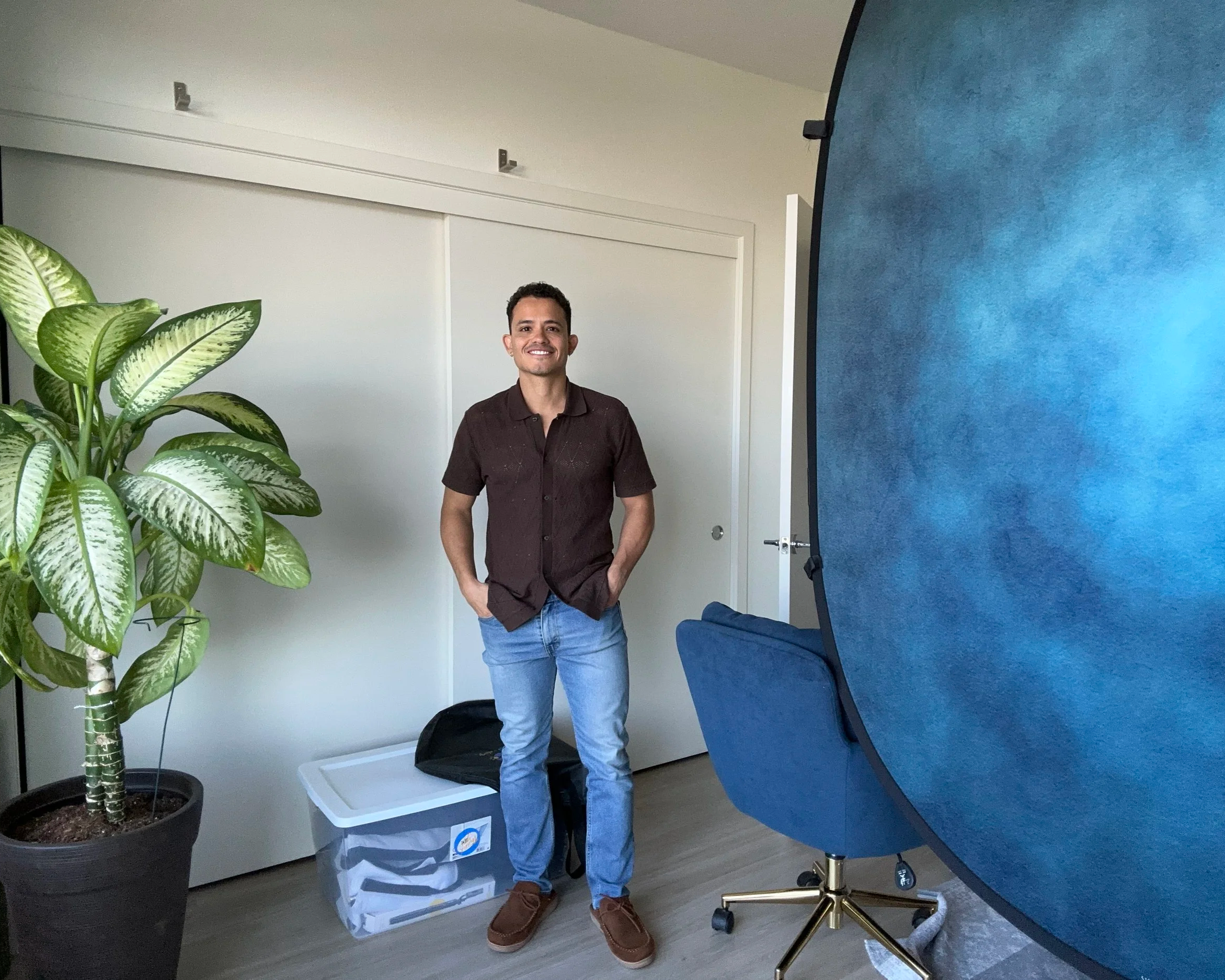
I started treating my self-tape space like an actual creative space instead of somewhere I reluctantly set up a tripod between other things. I got more comfortable with my setup. I stopped scrambling for lighting and a clean background at the last minute and actually built a corner of my space that felt intentional, that felt like mine. I started working with people I trusted to read with me, people who understood the material and could give me something real to play off of instead of a flat, disengaged voice reading lines back at me. And maybe most importantly, I stopped approaching every single tape like it needed to be perfect before I’d let myself send it.
Read More: Your Complete Guide To Self-Tapes
That last part took the longest to unlearn, honestly. I think a lot of actors get stuck exactly there, chasing a version of perfect that was never actually the goal in the first place. Casting isn’t looking for a flawless tape.
They’re looking for a specific, honest choice they can picture on their screen or on a set. Once I actually believed that, the pressure started to loosen.
There’s something genuinely freeing about learning to make a choice without a room full of people validating it in real time. In the room, you get instant feedback, whether it’s a laugh, a nod, a slight shift in energy that tells you something landed. With a self-tape, none of that exists.
You send it into a void and wait. So you have to trust yourself more. You have to develop your own internal sense of when a choice is working, without anyone in the room to confirm it for you. You have to know when the work is actually done, not just when you’ve run out of nerve to keep going.

Photo by @anthonytran
And you have to resist the urge to do take twenty-eight because take twenty-seven suddenly feels off, even though it was probably fine.
Anyone who’s spent an afternoon self-taping knows exactly what I’m talking about. You watch a take back too many times and it stops meaning anything. Words start to sound strange in your own mouth. A choice that felt alive on take three starts to feel mechanical by take fifteen, not because it got worse, but because you’ve watched it so many times you’ve lost all perspective on it.
Learning to stop, to trust an early instinct over an exhausted one, is its own skill. Nobody teaches you that in a scene study class, but it might be one of the most useful skills a working actor can build right now.
Read More: What's Actually In Your Control: The Actor's 90%
I still miss being in the room. I probably always will, if I’m honest. There’s a version of this business that lived in that immediacy, and I don’t think anything fully replaces it. But self-tapes are part of the job now, whether we like it or not, and the sooner you stop treating them like the lesser version of auditioning, the better they actually start to feel.
Here’s what I think matters most.
I’ve talked to a lot of actors who treat self-tapes like something to survive rather than something to actually inhabit. I understand the instinct. It’s easy to resent a format you didn’t ask for and didn’t train for. But resentment doesn’t book jobs, and it definitely doesn’t come across well on camera, even when you think you’re hiding it.
Casting can feel tension in a tape the same way they can feel it in a room, just in a quieter, less obvious way.
This industry is going to keep shifting in ways none of us fully control. Formats change. Technology changes. What casting wants from an audition tape today looks different than it did five years ago, and it’ll probably look different again in another five.
The actors who last aren’t the ones who fight every shift on principle. They’re the ones who figure out how to bring their actual craft into whatever format shows up next, without losing themselves in the process.
So make the self-tape process yours. Find the fun in it, even if that sounds strange to say about something that can feel isolating and repetitive. Let yourself play again, the way you probably did before every audition started to feel high stakes and every send-off started to feel like it needed to be flawless. A self-tape doesn’t have to be a sterile, clinical exercise.
Dive In: 4 Best Acting Tips For Beginners: How-To Guide From A Working Actor
It can be a space where you actually experiment, where you try a choice you’re not sure about because nobody’s watching live and judging it in the moment.
That’s not a limitation. That’s actually a kind of freedom the room never gave you.

Photo by @jeremybishop
Build a setup that feels good to walk into. Find your people to read with you. Give yourself permission to trust an early take. And stop mourning the room every time you hit record. The room isn’t coming back the way it was, at least not anytime soon, and there’s real work to be done in the meantime.
Adapt, and keep working. The room made you an actor. The self-tape can still make you a working one.
If you’re struggling with your own self-tape setup or process and want a second opinion, reach out. I’m always glad to talk it through.
Get Started With Us!
Looking for an acting class this year? Want to level up in your acting career once and for all?
Take our free acting quiz below and find out your acting level.
